

AI in retail analytics: what FMCG suppliers need to know
AI in retail analytics is one of the most discussed topics in FMCG right now. And for good reason. Retailers are using AI to make category decisions faster, with more granularity, and with less dependency on supplier input. The bar for what counts as a useful analysis is rising.
For FMCG suppliers, this creates both an opportunity and a risk. The opportunity: AI in retail analytics can transform how category teams work, moving from backward-looking reports to real-time signals and predictive recommendations. The risk: over 85% of generative AI projects fail to reach production, and the primary reason is always the same. The underlying data is not good enough.
This article explains what AI in retail analytics means for FMCG suppliers, what it requires to work, and how to build the data foundation that makes it possible. It connects to our broader article on AI in category management and the analytics maturity model for FMCG suppliers.

What is retail analytics?
Retail analytics is the practice of using sales, inventory, and supply chain data to improve product availability, pricing, and demand planning. For FMCG suppliers, it means using data from retailer platforms to understand how products perform at store level, how promotions affect category dynamics, and where distribution gaps exist.
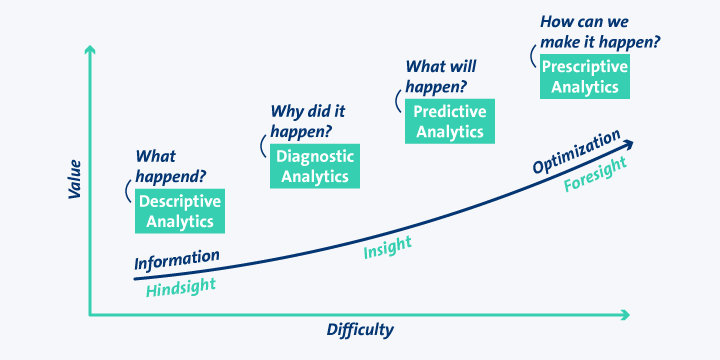
Traditional retail analytics was descriptive: it told you what happened last week. AI in retail analytics goes further. It identifies patterns across millions of data points that no human analyst can process manually, surfaces signals in near real-time, and generates specific recommendations rather than general observations.
The shift from traditional to AI powered retail analytics is not incremental. It changes what category teams spend their time on, what they can advise retailers on, and ultimately how relevant they are as strategic partners.
Why AI in retail analytics is difficult to implement
The promise of AI in retail analytics is clear. The execution is hard. And the primary obstacle is almost never the AI itself.
For FMCG suppliers operating across multiple retail accounts, data arrives from SIS, 7EVEN, Nielsen, Circana, IPV, Superscanner and internal systems, each in a different format, with different product hierarchies and different update cadences. Before any AI model can work with that data, it needs to be harmonized into a consistent structure.
That harmonization work currently consumes an average of 60% of available time for category teams at FMCG suppliers. What remains is not enough for the analysis, let alone for building and maintaining AI models on top of it. The result is that most suppliers are still in the descriptive phase of retail analytics, reporting what happened, while retailers have moved into predictive and prescriptive territory.
Industry research confirms the pattern: most generative AI projects fail not because the models are inadequate, but because the data they are fed is underdeveloped. Fragmented, inconsistent, or context free data produces outputs that cannot be trusted. And outputs that cannot be trusted do not get used.
What AI in retail analytics actually requires
A unified data foundation
AI in retail analytics starts with a unified data foundation: all retail sources harmonized against a single consistent product model, with EAN changes processed automatically so historical trend lines stay intact. Without that foundation, AI models work on data that is incomplete by design. Data harmonization is not a preparatory step. It is the prerequisite.
Context, not just data
AI models need context to produce reliable outputs. A sales drop in week 12 means something different if there was a competitor promotion, a shelf reset, or a supply issue that week. A velocity spike means something different in a store cluster that was supported by extra facings versus one that was not.
That context has to be structured into the data foundation. Not as a note in a spreadsheet, but as part of the data model itself. Having a human in the loop remains essential: the category manager provides the judgment and context that no data model can generate automatically. Data quality is the foundation of everything. If the underlying data is wrong, every AI output built on top of it is wrong too.
Near real time visibility
Retail analytics powered by AI only delivers competitive advantage when the data is current. A promotion that is underperforming in week two needs to be visible in week two, not in a monthly report. A velocity drop at a specific retailer needs to surface as a signal when it is still actionable, not after it has already affected category performance.
Near real-time visibility across all retail accounts is what enables the shift from reactive to proactive. The category team stops spending time compiling reports and starts spending time on the insights those reports surface.
What AI in retail analytics enables for FMCG suppliers
Promotion forecasting before commitment
AI models that work on clean, harmonized retail data can calculate price elasticity per SKU and model promotion impact before the promotion is agreed. That means arriving at a retailer meeting with a proposal that is grounded in projected outcomes, not historical averages. Promotion margins growing up to 4% is achievable when the planning is data-driven rather than gut feel.
Assortment optimization at store cluster level
AI in retail analytics makes it possible to identify which SKUs are underperforming in which store clusters and why, and to model the category impact of assortment changes before they are implemented. That is the foundation of assortment optimization that goes beyond generic category advice to store specific recommendations.
Proactive signals instead of reactive reports
When retail analytics runs continuously on harmonized, near real-time data, the category team receives signals rather than summaries. A velocity drop at a specific retailer. A promotion that is underdelivering in week two. A competitor SKU gaining distribution in a cluster where your range is underrepresented. These signals arrive when action is still possible, not after the fact.
Cross retailer intelligence
One of the most valuable aspects of AI in retail analytics for suppliers is the cross-retailer view. Retailers see their own data. Suppliers, when their data foundation is strong enough, can see patterns across all their retail accounts simultaneously. That cross-retailer perspective is something the retailer cannot generate on their own, and it is exactly what makes a supplier a valuable strategic partner rather than a vendor asking for shelf space.
The supplier retailer gap in retail analytics
Retailers own roughly 60% of the relevant data in the value chain. Suppliers own around 20%. As retailers invest more heavily in AI and retail analytics infrastructure, their ability to make category decisions independently grows. If the gap in analytics capability becomes too large, retailers stop relying on supplier input and start making category decisions on their own data. That is not a theoretical risk.
The suppliers that remain relevant as strategic partners are those that bring cross-retailer intelligence and predictive insights the retailer cannot generate alone. AI in retail analytics is what makes that possible. But only when the data foundation beneath it is strong enough.
How Captain powers AI retail analytics for FMCG suppliers
Captain is built to give FMCG suppliers the retail analytics capability they need to stay relevant in a world where retailers are already using AI at scale.
The platform automatically harmonizes all retail sources, SIS, 7EVEN, Nielsen, Circana, IPV and internal data, against a single consistent product model. EAN changes are processed automatically. Restatements are handled without manual intervention. The data foundation is always current and complete enough for AI models to work reliably.
The AI assistant answers questions about category performance in plain language, drawing on all the data in the platform. The promo simulator models promotion impact based on price elasticity per SKU before commitment. The assortment optimization identifies per store cluster which changes will improve category revenue and margin.
At elho, the number of data-backed category plans grew from 10 to 25+ after automating the data foundation. At Johma, a promotion plan built on AI powered price elasticity analysis was adopted directly by Hoogvliet, Vomar and Plus. At MAAZ Cheese, assortment optimization based on POS data resulted in 9.4% margin improvement. That is AI in retail analytics delivering measurable results.
Ready to put AI to work on your retail data?
Request a demo to see how Captain helps your team build the data foundation for AI powered retail analytics, and come away with practical tips for your specific situation.

Article written by
Roy van Beest
Frequently asked questions about AI in retail analytics
What is AI in retail analytics?
AI in retail analytics is the use of artificial intelligence to analyze retail data, identify patterns and generate predictive insights for promotions, assortments and category decisions. For FMCG suppliers, it enables category teams to move from historical reporting to real-time and predictive decision making.
What types of data does AI in retail analytics use?
AI in retail analytics uses POS data, sell-out data, inventory data, pricing and promotion data, syndicated market data and internal sales data. FMCG suppliers typically combine sources such as SIS, 7EVEN, Nielsen, Circana, IPV and internal ERP systems into one harmonized retail data model.
Why do most AI retail analytics projects fail?
Most AI retail analytics projects fail because the underlying data is fragmented, inconsistent or missing context. AI models only produce reliable outputs when retail data is harmonized, structured consistently and updated frequently across all retail sources.
What is the difference between retail analytics and AI-powered retail analytics?
Traditional retail analytics explains what happened in the past through reports and dashboards. AI-powered retail analytics goes further by identifying patterns, predicting outcomes and recommending actions in near real time using machine learning and large scale retail data analysis.
How does AI in retail analytics help FMCG suppliers?
AI in retail analytics helps FMCG suppliers optimize promotions, improve assortment decisions, identify distribution gaps and surface category risks earlier. Suppliers can bring predictive insights and cross-retailer intelligence to category discussions instead of relying only on historical reporting.
Why is data harmonization important for AI in retail analytics?
AI models require retail data that is clean, consistent and structured in the same way across all sources. Data harmonization ensures that retailer data from systems like SIS, 7EVEN, Nielsen and Circana can be analyzed together reliably, making AI outputs more accurate and actionable.
Related posts
%20Category%20Management%20in%20FMCG.jpg)
Agent to Agent (A2A) Category Management in FMCG
Agent to Agent (A2A) Category Management in FMCG
The analytics maturity model for FMCG suppliers: from reporting to predictive AI
The analytics maturity model for FMCG suppliers: from reporting to predictive AI

Joint Category Development: the model that fixes how FMCG and retail work together
Joint Category Development: the model that fixes how FMCG and retail work together